The fragility of Israeli security
TEHRAN – The reality of the Israeli regime’s security doctrine is that it has long remained fragile and vulnerable.
There was a genuine fear that everything built over decades could collapse in a single blow from one of its “hostile” fronts. That is exactly what happened on the morning of October 7.
At the beginning of 2023, around nine months before the outbreak of the al-Aqsa Flood operation, a group of Israeli political and strategic experts presented a set of recommendations during a workshop organized by the regime’s Institute for Policy and Strategy.
The goal was to develop a comprehensive security strategy addressing future vision, objectives, and priorities for the occupying regime’s forthcoming policies. At the time, the recommendations emphasized strengthening strategic cooperation with the United States, its staunchest ally and supporter, as well as expanding and deepening relations with certain regional states.
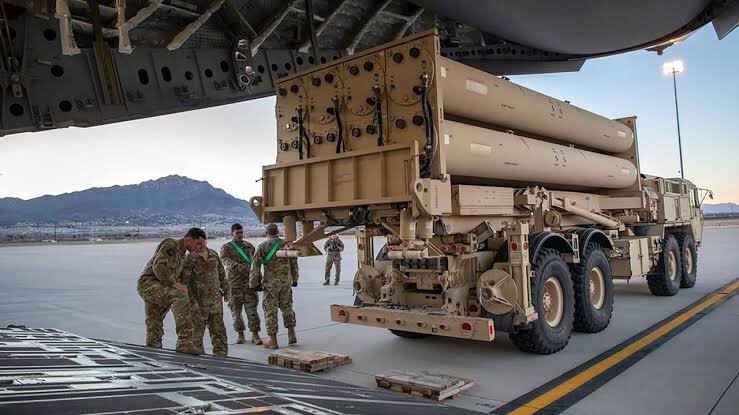
This was intended to culminate in the establishment of a regional air defense system, aimed primarily at countering any Iranian threat and, more broadly, other near and distant dangers.
The participants classified the period as one marked by multiple security and strategic challenges. What distinguished it from earlier phases was the extreme difficulty of addressing emerging issues while adhering to previously defined principles and priorities.
Despite the Zionist regime’s strong economy, advanced industrial capacity, and technological sophistication, it was suffering from a fragile security situation due to the large number of volatile issues.
Among the unstable and explosive situations is with Hezbollah, despite the temporary de-escalation surrounding the Karish gas field, and the escalation of armed resistance in the occupied West Bank.
This resistance had become a genuine dilemma that the occupation failed to resolve, even after the “Break the Wave” assault, which was launched in response to the surge of Palestinian resistance operations, particularly in northern West Bank. Added to this was the role of Palestinian resistance forces in Gaza, which had become more organized and more experienced.
Less than ten months after those recommendations, typically given serious consideration by the regime’s political and military establishments and heavily relied upon in shaping the regime’s future vision, an unforeseen event occurred on October 7, 2023.
An unprecedented blow came from the front that had been ranked at the bottom of the Zionist regime’s threat list. Gaza.
This was a deeply unsettling surprise for all Israelis, especially those responsible for long-term strategic planning and national security affairs.
The Zionist regime’s security is defined as the defense of “existence,” rather than the defense of state interests, as understood by most other countries. This concept was articulated by David Ben-Gurion in the 1950s and continues to be emphasized by Benjamin Netanyahu to this day.
Under this vision, the regime’s security encompasses a wide range of vital activities, including military power; the development of the armed forces as the primary striking arm; the participation of the entire population as a reserve army; Jewish immigration to Palestine; settlement expansion; reducing reverse migration; strengthening the economic base; conducting external diplomatic activity in service of security needs; and investing in education and the fortification of the internal front to ensure societal resilience.
The concept of the security doctrine also extends beyond the geographic boundaries of the occupying regime. It includes security and military activity abroad and efforts to influence regional dynamics in a way that allows the regime to anticipate developments among surrounding powers and prevent them from constraining its geopolitical capabilities.
The aim is to compel these states to accept the occupation regime as an unchangeable reality.
To achieve these objectives, Ze’ev Jabotinsky, leader of the Irgun militia and the Revisionist Zionist movement, formulated his “Iron Wall” theory in 1923. This doctrine rested on three core principles: deterrence, early warning, and decisive victory. Its purpose was to convince all of the regime’s enemies that it was an invincible force, that its army could not be defeated, and that it would inevitably prevail in every conflict.
Thirty years later, Jabotinsky’s theory became a central component of the Zionist military and security doctrine. It evolved into the ideological foundation of the regime’s ruling parties, regardless of their political orientation, and formed the backbone of the security doctrine laid down by David Ben-Gurion in 1953.
These principles were translated into practical policy. Deterrence was divided into two dimensions: the first aimed at deterring Arab and Islamic states from launching preemptive wars by maintaining clear qualitative military superiority, including nuclear dominance.
The second focused on deterring Palestinians and Arab non-state actors operating through unconventional means. These groups were addressed according to Ben-Gurion’s original doctrine, which emphasized inflicting heavy material and human losses, breaking morale, limiting military capabilities, and pressuring their popular support base. This was evident in the genocidal war on Gaza.
The concept of early warning relied on maintaining intelligence superiority over all adversaries, enabling the occupation regime to understand both their military capabilities and future intentions at tactical and strategic levels. This allowed for timely defensive planning, mobilization of reserve forces, and, in certain cases, the launch of preemptive strikes.
A decisive victory aimed at fighting short, geographically limited wars that would achieve objectives quickly. This approach stemmed from the occupying regime’s small geographic size, limited human resources, and lack of strategic depth.
Following the outbreak of the second Intifada in 2000, during which the Palestinian resistance employed new tools such as rockets and explosive devices, and the 2006 war with Hezbollah, the regime updated its national security doctrine.
A fourth concept, "defense" was added, focusing on protecting the internal front from threats that could disrupt normal life.
This was implemented through air defense systems, early warning networks, new intelligence-gathering methods, and the evacuation of settlers from conflict zones to reduce casualties.
However, the regime’s security institutions and numerous strategic research centers sought further concepts after failing to counter Palestinian rocket attacks in 2012, 2014, and other confrontations.
These failures revealed the vulnerability of the regime’s internal front and exposed deep structural weaknesses that Palestinian resistance forces could exploit to strike the regime’s strategic depth.
In response, additional concepts were introduced. The fifth was “containment” or ‘absorption,” aimed at addressing two main threats: attacks on Israel’s central region, including Tel Aviv and other major cities, and the resistance’s ability to inflict physical damage on targets.
The sixth concept, "prevention" or “denial” focused on stopping resistance movements from developing advanced military capabilities through obstruction and deterrence. The seventh, “disruption,” involved destroying existing enemy capabilities, particularly non-conventional weapons.
The eighth concept, "paralysis," referred to launching military attacks to deprive adversaries of their core capabilities, either partially or entirely. The ninth was “international cover,” which involved diplomatic efforts, legal maneuvers, and media campaigns to secure international legitimacy for the regime’s illegal use of force.
The tenth and final concept was “joint security cooperation,” which sought to leverage bilateral relations with allied or friendly states to enhance military and security collaboration at regional and international levels.
Despite all these additions, the regime’s security reality remained fragile. There was a persistent fear that everything built over decades could collapse in a single strike from one hostile front.
That fear materialized on October 7, 2023. Not only did the Gaza Division collapse, but the occupation regime’s entire security and intelligence system unraveled within hours. The regime was left exposed, surviving only due to the rapid intervention of its allies, chief among them the United States, which mobilized its vast military, political, and economic resources to rescue its most important regional ally after a devastating defeat that morning.
The al-Aqsa Flood operation inflicted severe damage on the regime’s security doctrine, dismantling in a single blow what had been built over more than seventy years.
The long-term consequences for the future of this regime, which, despite its efforts to recover losses and expand aggression across multiple arenas, continues to suffer from a deep-seated sense of insecurity that many Israeli experts believe will persist until its eventual disintegration.
Leave a Comment